

Bagdara Wildlife Sanctuary Latest News
The Standing Committee of the National Board for Wildlife (SC-NBWL) recently told the Madhya Pradesh government to explore alternative areas for compensatory notification, while deliberating on the proposed denotification of the Bagdara Wildlife Sanctuary.
About Bagdara Wildlife Sanctuary
- It is situated in the Sidhi and Singrauli districts of Madhya Pradesh.
- Encompassing an area of approximately 478 sq.km., the sanctuary was established in 1978 for the conservation of blackbuck and other wildlife species, including wild boar, jackal, fox, porcupine, hyena, and sambar.
- Son River makes the southern boundary of the sanctuary.
- Natural caves and rock shelters are part of the Sanctuary.
- Vegetation: The sanctuary hosts a very dense cover of dry deciduous mixed forest.
- Flora:
- The dominant trees include Gigantic Creepers, Mango Groves, Orchids, Teak Trees, and many more.
- Lendia, Khair, Dhawda, and Tendu are also common.
- Fauna: It boasts a number of wild animals, including Tiger, Panther, Deer, Sambhar, Hyenas, Chinkara, Cheetal, Wild Boar, Black Buck, along with an incredible diversity of birds.
News: TP
Bagdara Wildlife Sanctuary FAQs
Q1: Where is Bagdara Wildlife Sanctuary located?
Ans: It is located in the Sidhi and Singrauli districts of Madhya Pradesh.
Q2: What is the area of Bagdara Wildlife Sanctuary?
Ans: Approximately 478 square kilometres.
Q3: Which river forms the southern boundary of Bagdara Wildlife Sanctuary?
Ans: The Son River.
Q4: What type of vegetation is found in Bagdara Wildlife Sanctuary?
Ans: Dense dry deciduous mixed forest.
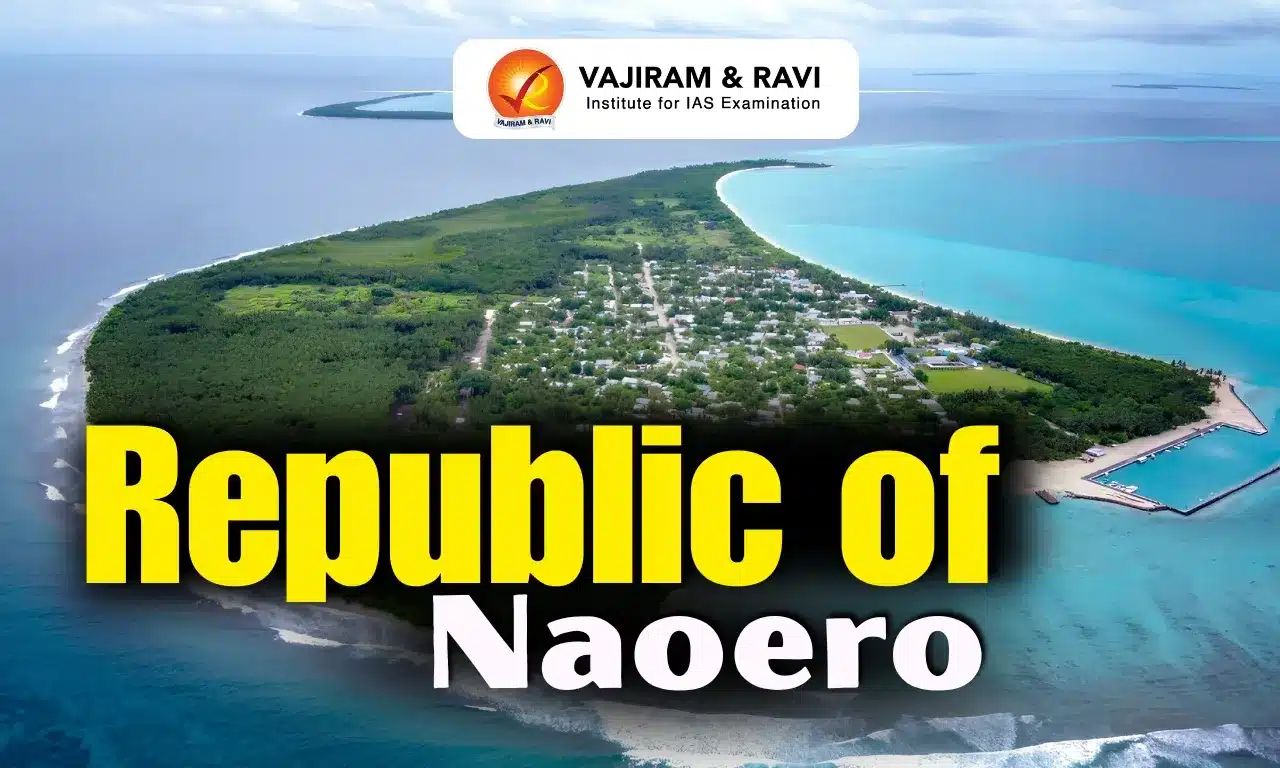
Republic of Naoero Latest News
The Pacific island nation of Nauru has officially changed its name to the Republic of Naoero recently reverting to its traditional designation in a move it said was aimed at strengthening national identity and cultural heritage.
About Republic of Naoero
- It is an island republic located in the southwestern Pacific Ocean.
- It consists of a raised coral island located in southeastern Micronesia, 40 km south of the Equator.
- It is the world’s smallest independent republic, with a population of approximately 12,000 and a land area of just 21 sq.km.
- The island is about 1,300 km northeast of the Solomon Islands; its closest neighbor is the island of Banaba, in Kiribati, some 300 km to the east.
- It has no rivers or lakes.
- Nauru has no official capital, but government offices are located in the district of Yaren.
- Nauruan is the national language.
- Currency: Australian dollar
- Political System:
- Its constitution, adopted upon gaining independence in 1968, established it as a republic with a Westminster-style parliamentary system of government.
- The President is elected by, and responsible to, the unicameral parliament and is both head of government and head of state.
- As there are no political parties in Naoero, all Members of Parliament (MPs) stand as independents.
- Economy:
- Historically one of the world’s wealthiest countries per capita because of phosphate mining.
- Phosphate reserves have been largely depleted, leading to economic challenges.
- Agriculture (with the exception of coffee and copra plantations along the coastal and lagoon perimeters), fishing, manufacturing, and tourism are of minor value to the overall economy.
- However, Nauru has an exclusive economic zone extending 200 miles (320 km) offshore.
- The sale of commercial fishing licenses began to bring in a steady revenue during the 1990s.
News: TP
Republic of Naoero FAQs
Q1: Where is the Republic of Naoero located?
Ans: It is located in the southwestern Pacific Ocean.
Q2: What type of island is the Republic of Naoero?
Ans: It is a raised coral island.
Q3: What is the official capital of the Republic of Naoero?
Ans: It has no official capital.
Q4: What form of government does the Republic of Naoero have?
Ans: A republic with a Westminster-style parliamentary system.
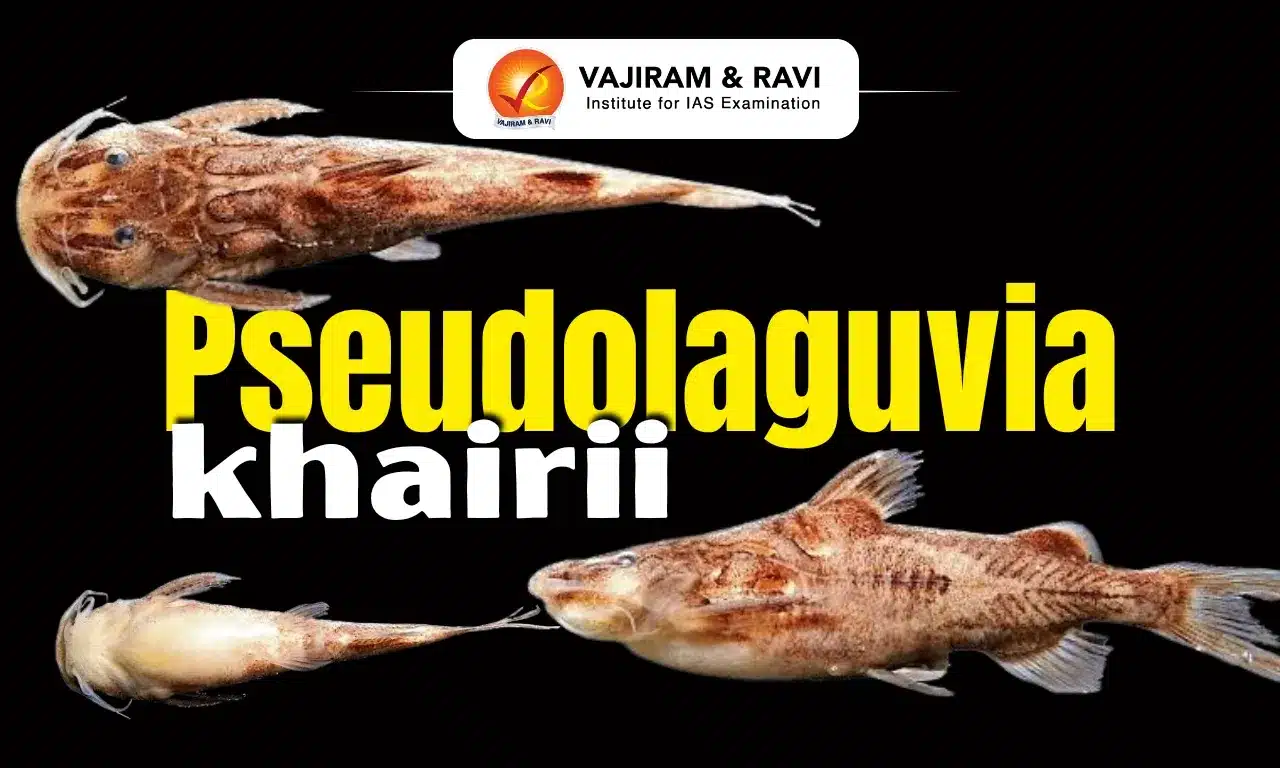
Pseudolaguvia khairii Latest News
Researchers recently discovered a new species of freshwater catfish named Pseudolaguvia khairii in Odisha.
About Pseudolaguvia khairii
- It is a new species of freshwater catfish.
- It was discovered in the Budhabalanga River in the Mayurbhanj district, Odisha.
- It was named in honour of the legendary tigress Khairi, who became the face of wildlife conservation and a unique human-animal bond in Odisha nearly five decades ago.
- It belongs to the genus Pseudolaguvia, a group of small hillstream catfishes inhabiting the clear, fast-flowing rivers of India, Bangladesh, Nepal, and Myanmar.
- Only a few centimetres long, Pseudolaguvia khairii can be distinguished from all its known relatives by a unique fleshy protuberance at the base of its dorsal fin, a feature not previously recorded in the genus.
News: NIE
Pseudolaguvia khairii FAQs
Q1: What is Pseudolaguvia khairii?
Ans: Pseudolaguvia khairii is a newly discovered species of freshwater catfish.
Q2: Where was Pseudolaguvia khairii discovered?
Ans: It was discovered in the Budhabalanga River in Mayurbhanj district, Odisha.
Q3: It was discovered in the Budhabalanga River in Mayurbhanj district, Odisha. Why was Pseudolaguvia khairii named “khairii”?
Ans: It was named in honour of the legendary tigress Khairi, who became a symbol of wildlife conservation and the unique human-animal bond in Odisha.
Q4: Where are catfishes of the genus Pseudolaguvia commonly found?
Ans: They are found in the clear, fast-flowing rivers of India, Bangladesh, Nepal, and Myanmar.

Magellanic Bridge Latest News
A team led by Inter-University Centre for Astronomy and Astrophysics (IUCAA) team has discovered the first known system of its kind in the Magellanic Bridge by using eROSITA X-ray telescope.
About Magellanic Bridge
- It is a stream of stars and gas created by the close encounter of two nearby galaxies, the Large and Small Magellanic Clouds.
- It is mainly a gaseous feature connecting the two galaxies, with a small fraction of in situ formed young stars.
- The MB is believed to be composed of tidally stripped material from the SMC during its last encounter with the LMC, approximately 200-300 Myr ago.
- Significance
- Magellanic Bridge can help us understand how close encounters between galaxies influence the way binary stars form, evolve and survive.
- Researchers will be able to compare stellar evolution in the Bridge with that in the Large and Small Magellanic Clouds, and gain a clearer picture of how interactions between neighbouring galaxies shape their stars over time.
Key Features of eROSITA X-ray Telescope
- eROSITA (extended ROentgen Survey with an Imaging Telescope Array) is a wide-field X-ray telescope on-board the Russian-German “Spectrum-Roentgen-Gamma” (SRG) observatory.
- It was developed under the leadership of the Max-Planck Institute for extraterrestrial Physics (MPE) in Germany (DE).
- eROSITA is a sensitive X-ray telescope capable of delivering deep, sharp images over very large areas of the sky in the energy range ~0.2-8 keV.
- It is placed in a halo orbit around the L2 point
- It has been performing an all-sky survey, in which the whole celestial sphere is mapped once every six months.
Source: IE
Magellanic Bridge FAQs
Q1: The Magellanic Bridge connects which two objects?
Ans: Large Magellanic Cloud and Small Magellanic Cloud
Q2: What is the advantage of studying Magellanic Bridge?
Ans: Galaxy formation and interaction

Dhimsa Dance Latest News
A recent performance of the traditional Dhimsa dance by more than 13,000 tribal women and girl students at the Alluri Sitarama Raju International Airport in Bhogapuram was recognised by Guinness World Records as the “largest Dhimsa dance”.
About Dhimsa Dance
- It is a popular tribal dance performed by tribes, including Bagata, Valmiki, Poraja, Khond, Gadaba, Kondadora, Mukadora, and Kotia in Andhra Pradesh .
- It is performed during festivals, weddings, and at the time of the “hunting festival” in April when men and women dance for hours together.
- There are 12 varieties of Dhimsa and the origin can be traced to the Koraput area, the home of the Ghond Tribe.
- Performance:
- Typically performed by a group of 15 to 20 women dressed in traditional, colorful ethnic sarees and ornaments, the dancers move in synchronous circles to the rhythm of native instruments played by male community members.
- The beauty of this dance centres on the movements of the dancers without much emphasis on expression or literary texts.
- The feet and the hand movements dominate the dance.
- It is accompanied by wind and percussion instruments; the dance changes with the music.
- Unique tribal musical instruments accompanying this dance form include the Mori (a wind instrument), Thudum (drum), and Dappu.
- Themes: Various themes of the Dhimsa, are woven around their mythologies, folktales, ethos, mores, economic activities, and kinship and marital life, etc.
News: TH
Dhimsa Dance FAQs
Q1: What is Dhimsa Dance?
Ans: Dhimsa is a popular tribal dance performed by several tribal communities in Andhra Pradesh.
Q2: Which tribes traditionally perform Dhimsa Dance?
Ans: Tribes such as the Bagata, Valmiki, Poraja, Khond, Gadaba, Kondadora, Mukadora, and Kotia perform Dhimsa Dance.
Q3: On what occasions is Dhimsa Dance performed?
Ans: It is performed during festivals, weddings, and the hunting festival held in April.
Q4: Who usually performs Dhimsa Dance?
Ans: It is typically performed by a group of 15 to 20 women.
Q5: What is the main beauty of Dhimsa Dance?
Ans: The beauty of the dance lies in the graceful movements of the dancers rather than facial expressions or literary texts.

Samudra Manthan Scheme Latest News
Recently, the Union Cabinet has approved ‘Samudra Manthan’ – the National Offshore Exploration Scheme with a total outlay of ₹84,084 crore.
About Samudra Manthan Scheme
- It is also called the National Offshore Exploration Scheme.
- Nodal Ministry: It is a Central Sector Scheme of the Ministry of Petroleum & Natural Gas.
- Implementation Period: Up to FY 2030–31.
- The scheme aims at unlocking India’s vast offshore energy potential.
Features of Samudra Manthan Scheme
- It encompasses a comprehensive set of interventions across the offshore exploration value chain.
- It provides for large-scale acquisition, processing and interpretation of high-quality seismic data, accelerated deepwater and ultra-deepwater exploratory drilling, and scientific drilling in frontier basins.
- It involves development of common offshore production and evacuation infrastructure, and establishment of an integrated Oil & Gas Manufacturing and Services Zone.
- It also includes dedicated provisions for digital programme management, capacity building, technology adoption, stakeholder engagement and international outreach, creating an integrated ecosystem to accelerate offshore exploration and production in the country.
Source: PIB
Samudra Manthan Scheme FAQs
Q1: Samudra Manthan Scheme is implemented by which Ministry?
Ans: Ministry of Petroleum & Natural Gas
Q2: What is the implementation period of Samudra Manthan Scheme ?
Ans: FY 2030-31

About Pradhan Mantri Surya Sarovar Yojana Latest News
It is a scheme for the development of Floating Solar Photovoltaic (FSPV) Projects with Energy Storage Systems (ESS).
Features of Pradhan Mantri Surya Sarovar Yojana
- It envisages the development of 5,000 MW of Floating Solar Photovoltaic projects with co-located Energy Storage Systems having a minimum storage capacity of two hours i.e.,10,000 MWh.
- Time Period: The projects will be sanctioned during FY 2026-27 to FY 2030-31, with disbursement of financial support continuing up to FY 2032-33.
- Financial Assistance: Central Financial Assistance (CFA) of Rs. One crore per MW will be provided for eligible Floating Solar Photovoltaic projects after successful commissioning.
- In addition, CFA of up to Rs.50 lakh per project will be available for undertaking feasibility studies, including bathymetry and hydrography assessments, environmental studies, and other preparatory activities required for de-risking the project development.
Significance of Pradhan Mantri Surya Sarovar Yojana
- It would enhance the floating Solar PV capacity in the country by 5,000 MW, which is presently around 700 MW only.
- It would provide an opportunity to gainfully utilize existing reservoirs & industrial ponds, and eliminate competition for scarce land resources.
- The integration of an energy storage system will help strengthen grid reliability.
- It would help in the reduction of around 10 million tonnes of CO₂ emissions annually.
- It would help in the generation of approximately 16,000–17,000 full-time equivalent employment opportunities across the project value chain.
- The scheme would also promote domestic manufacturing of floatation systems as well as the entire value chain of the projects.
Source: PIB
Pradhan Mantri Surya Sarovar Yojana FAQs
Q1: Which is the nodal Ministry for Pradhan Mantri Surya Sarovar Yojana?
Ans: Ministry of New and Renewable Energy
Q2: What is the main advantage of floating solar over ground-mounted solar ?
Ans: Saves land and reduces water evaporation

Cholera Latest News
While cholera has nearly disappeared from wealthy countries, it remains one of the world’s deadliest waterborne diseases in places where clean water and basic healthcare are unreliable.
About Cholera
- Cholera is a disease that is caused by the bacteria Vibrio cholerae.
- Cholera can cause serious diarrhea and dehydration. Without treatment, the disease can be fatal within hours, even in people who are healthy.
- Transmission:
- People can get cholera by drinking water or eating food contaminated with cholera bacteria.
- The disease is most common in places with poor sanitation, crowding, war, and famine. Cholera outbreaks are more common in warm climates.
- Cholera bacteria also can live in brackish (slightly salty) and coastal waters. Eating raw shellfish like shrimp and crab can be a source of cholera.
- Cholera is not likely to spread from person to person or from casual contact with someone with cholera.
- It is often predictable and preventable. It can ultimately be eliminated where access to clean water and sanitation facilities, as well as good hygiene practices, are ensured and sustained for the whole population.
- Symptoms:
- Most people infected with V. cholerae do not develop symptoms but can spread the bacteria through their faeces for 1–10 days.
- Symptoms appear 12 hours to 5 days after infection.
- Most people with the disease have mild or moderate symptoms.
- A minority of patients develop severe acute watery diarrhoea and life-threatening dehydration.
- Treatment:
- Treatment for cholera includes drinking plenty of fluids or getting intravenous fluids to prevent dehydration.
- Healthcare providers also sometimes prescribe antibiotics like doxycycline, erythromycin, or azithromycin to help you feel better.
- Providers also treat kids between the ages of 6 months and 5 years with zinc supplements.
- Antidiarrheal medicines aren’t recommended for cholera and could make symptoms worse.
News: DTE
Cholera FAQs
Q1: What is cholera?
Ans: Cholera is a disease caused by the bacterium Vibrio cholerae.
Q2: What are the major health effects of cholera?
Ans: Cholera can cause severe diarrhoea and dehydration.
Q3: How is cholera transmitted?
Ans: It is transmitted by consuming water or food contaminated with Vibrio cholerae.
Q4: Where are cholera outbreaks most common?
Ans: They are most common in places with poor sanitation, overcrowding, war, and famine.
Q5: What is the primary treatment for cholera?
Ans: Drinking plenty of fluids or receiving intravenous fluids to prevent dehydration.

Vishwas 2026 Latest News
The Employees’ Provident Fund Organisation (EPFO) recently launched VISHWAS, 2026 to facilitate amicable settlement of disputes relating to levy of damages and penalty-related disputes.
About Vishwas 2026
- It was launched by the Employees’ Provident Fund Organisation (EPFO), under the Ministry of Labour & Employment.
- It is a one-time dispute resolution initiative to facilitate amicable settlement of disputes relating to levy of damages and penalty-related disputes.
- The scheme provides employers with an opportunity to settle eligible cases through a transparent, fully digital and time-bound process.
- It has been introduced with the objective of promoting voluntary compliance, reducing litigation, and enabling speedy resolution of long-pending disputes relating to penalty/damages while safeguarding the interests of employees.
- The VISHWAS scheme came into effect on June 29, 2026. It will remain operational for six months from the date of notification.
- The scheme will broadly cover four categories of cases, including:
- Cases where orders for penalty or damages are under challenge before a judicial forum.
- Final damages or penalty orders where recovery is pending or only partly made, including Recovery Certificate (RRC) cases.
- Cases where notices have been issued but final orders for damages or penalty are yet to be passed.
- Cases where notices for penalty or damages are yet to be issued.
- Exclusion:
- Cases where damages or penalties have already been fully recovered.
- Cases involving fraud, misappropriation or deliberate falsification of records.
- Cases where the applicable statutory interest has not been fully deposited.
- Eligible employers with pending disputes can apply through the EPFO Employer Portal using a Digital Signature Certificate (DSC) or e-Sign.
- Applicants must also furnish an undertaking that no further appeal will be pursued in respect of the dispute settled under the scheme.
- Benefits:
- It enables eligible employers to settle disputes by offering substantially reduced rates for historical defaults (prior to 14 June 2024), subject to payment of the applicable statutory interest and compliance with prescribed conditions.
- For employers, the scheme presents a valuable opportunity to regularise legacy EPF compliance issues at a significantly lower financial cost.
- Although the scheme is primarily directed at employers, employees stand to benefit through quicker resolution of long-pending EPF disputes and improved compliance by establishments.
News: NOA
Vishwas 2026 FAQs
Q1: What is Vishwas 2026?
Ans: It is a one-time dispute resolution initiative launched by the Employees’ Provident Fund Organisation (EPFO).
Q2: What is the primary purpose of Vishwas 2026?
Ans: To facilitate the amicable settlement of disputes relating to levy of damages and penalties.
Q3: How does Vishwas 2026 benefit employers?
Ans: It enables them to regularise legacy EPF compliance issues at a significantly lower financial cost.
Q4: How does Vishwas 2026 benefit employees?
Ans: It leads to quicker resolution of long-pending EPF disputes and improves compliance by establishments.

Xtreme Weather Grade Diesel Latest News
Recently, the Chief of the Army Staff (COAS) launched the indigenously developed Xtreme Weather Grade (XWG) Diesel in New Delhi.
About Xtreme Weather Grade Diesel
- It is a specialised diesel fuel developed for operations in extremely low temperatures.
- It is designed to remain usable at temperatures as low as minus 42 degrees Celsius.
- It is developed jointly by the Indian Army and Oil Marketing Companies.
Characteristics Xtreme Weather Grade Diesel
- It can withstand a wide temperature range, with a pour point of minus 42 degrees Celsius and a flash point of around 50 degrees Celsius.
- It is also compliant with BS-VI emission standards and IS 1460:2025 specifications.
- It allows it to be used in the Indian Army’s existing fleet without requiring engine modifications or re-homologation.
- It is the specialised fuel that will enhance the mobility, safety and operational availability of combat and logistics vehicles in extreme climatic conditions.
- Significance: The technology also has wider civilian use in high-altitude and severe winter regions and represents a significant step towards Atmanirbhar Bharat.
Source: PIB
Xtreme Weather Grade Diesel FAQs
Q1: Xtreme Weather Grade Diesel was launched by which company?
Ans: Indian Oil Corporation
Q2: What is the main purpose of Xtreme Weather Grade Diesel?
Ans: To be used in extremely cold regions without gelling

Vikram-1 Rocket Latest News
India’s first privately developed orbital-class rocket is all set for its maiden launch.
About Vikram-1 Rocket
- It is India’s first privately developed orbital-class rocket.
- It is developed by Skyroot Aerospace.
Features of Vikram-1 Rocket
- Vikram-1 is a seven-storey-tall, multi-stage orbital launch vehicle.
- Stages: It has four stages and the first three stages are solid-fuelled, providing robust initial thrust, topped by a hypergolic liquid upper stage for precise orbital adjustments.
- Stage 4 uses a cluster of four Raman engines. These are hypergolic engines, (meaning they ignite instantly when two chemicals, MMH fuel and NTO oxidiser, come into contact).
- It is built with an all-carbon composite structure, and powered by in-house developed propulsion systems, including 3D-printed engines and high-thrust solid-fuel rocket boosters.
- Carrying Capacity: It is designed to carry small satellites weighing up to 350 kg to Low Earth Orbit (LEO) and 260 kg into a sun-synchronous orbit (SSO).
- Design: The design emphasises simplicity, reliability, and the ability to launch within 24 hours from any location.
- It is built to target the small-satellite segment and is capable of placing multiple satellites into orbit in a single mission.
- Innovation: Other key innovations include, ultra-low-shock pneumatic separation systems, and advanced avionics for real-time guidance
Source: TH
Vikram-1 Rocket FAQs
Q1: What material is used in Vikram-1’s structure?
Ans: All-carbon composite structure for lightweight strength
Q2: What is the name of Vikram-1’s maiden orbital test flight?
Ans: Mission Aagaman
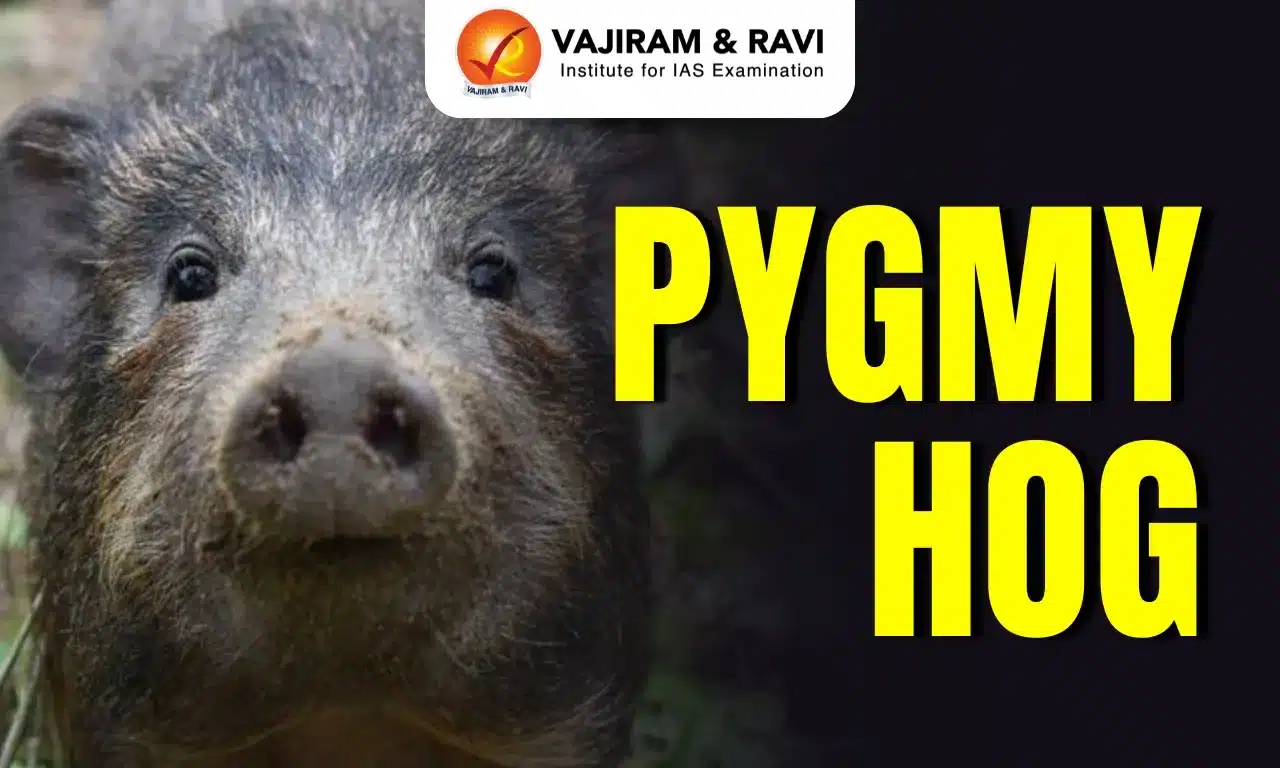
Pygmy Hog Latest News
The Standing Committee of the National Board for Wildlife (SC-NBWL) has recommended the inclusion of the pygmy hog in the list of critically endangered species under Integrated Development of Wildlife Habitats (IDWH).
About Pygmy Hog
- It is the smallest and rarest species of wild pig.
- It is one of the very few mammals that build its own home, or nest, complete with a ‘roof’.
- It is an indicator species as its presence reflects the health of its primary habitat.
- Habitat: It prefers undisturbed patches of grassland dominated by early succession riverine communities, typically comprising dense tall grass intermixed with a wide variety of herbs, shrubs and young trees.
- Distribution: Currently, they survive only in the grasslands of Assam’s Manas and Orang national parks.
- Diet: They feed on roots, tubers, shoots and ground vegetation, along with worms and other invertebrates.
Ecological Role of Pygmy Hog
- Enhances Soil Quality: It digs for roots, tubers, wild fruits, termites, earthworms, eggs and other food sources found in grasslands which aerates the soil and enhances its quality.
- Disperses Seeds: It also helps dispersing seeds through its dietary and foraging habits.
Conservation Status of Pygmy Hog
Integrated Development of Wildlife Habitats Scheme
- It is a centrally sponsored scheme that provides financial assistance to states to protect certain species or wildlife areas through its recovery programme for critically endangered species and habitats.
- Components of the scheme
- Support to Protected Areas (National Parks, Wildlife Sanctuaries, Conservation Reserves and Community Reserves)
- Protection of Wildlife Outside Protected Areas
- Recovery programmes for saving critically endangered species and habitat
Source: TH
Pygmy Hog FAQs
Q1: What is the conservation status of Pygmy Hog as per IUCN ?
Ans: Critically Endangered
Q2: Pygmy Hog is found only in which Indian state?
Ans: Assam

About Nihang Sikhs
- Nihangs, or Nihang Singhs, originally known as Akalis or Akali Nihangs, are a distinct warrior order within the Sikh community, known for their martial traditions, unique attire, and adherence to a specific code of conduct.
- They have a rich history dating back to the times of Guru Gobind Singh, the 10th Sikh Guru.
- They are easily recognizable by their distinctive blue attire, which includes blue robes, high turbans adorned with steel quoits (chakrams), and they often carry traditional weapons like swords, spears, and daggers.
- They are highly skilled in Gatka martial arts and have historically served as a dedicated and elite force to protect Sikh shrines and communities.
- Nihangs had a major role in defending the Sikh Panth after the fall of the first Sikh rule (1710-15), when Mughal governors were killing Sikhs, and during the onslaught of Afghan invader Ahmed Shah Durrani (1748-65).
- Current Status:
- Nihangs are today divided into several groups, each with its own “chhaoni” (cantonment), but are loosely organised into two “dals” (forces)—Buddha Dal and Taruna Dal, names initially given to the two sections into which the ‘Khalsa’ army was divided in 1733.
- The Buddha Dal has its headquarters at Talvandi Sabo, in Bathinda district, while the principal cantonment of the Taruna Dal Nihangs is at Baba Bakala in Amritsar district.
- Anandpur Sahib, the birthplace of the Khalsa, remains the main centre of Nihang gatherings.
- They assemble there in the thousands in March every year to celebrate Hola Mahalla, a Sikh festival introduced by Guru Gobind Singh.
- On that occasion, they hold tournaments of military skills, including mock battles.
Q1) Who was Guru Gobind Singh?
He was the 10th and last human Guru of the Sikhs. Born as Gobind Rai on December 22, 1666, in Patna, Bihar, Guru Gobind Singh was the son of the ninth Guru of Sikhism, Guru Teg Bahadur. He became the spiritual and temporal leader of the Sikhs on November 11, 1675, at the age of nine, following the martyrdom of his father, Guru Tegh Bahadur, at the hands of the Mughal emperor Aurangzeb in 1675. He was renowned as a warrior, a poet, and a prophet. He is fondly remembered by Sikhs as a defender of the faith and a champion of equality and justice.Among his notable contributions to Sikhism are founding the Sikh warrior community called Khalsa in 1699.
Source: Nihang Sikh Warriors Join Farmers Protest, Spotted Practicing With Spears and Shields