Sometimes it takes just one question to change the direction of someone’s entire life. For Rajasthan’s Neha Solanki, that question came from a private school’s principal while she was trying to get her young son an admission. “Where will the child sit?”The words sounded ordinary. But what they really meant was devastating. Her son, Duranjay, has cerebral palsy and cannot sit on his own. The school simply wasn’t willing to accommodate him. Instead, Neha was told to first teach her son how to sit properly and only then think about school.
13 Jul 2026 | 13:11
What’s one stereotype about women that you’re tired of hearing?
For most parents, this would have been just another door closing. For Neha, it turned into the start of a mission that would go on to help hundreds of children, and eventually earn her one of the country’s biggest honours.According to Rajasthan Patrika and various media, President Droupadi Murmu will now present Neha with the Grassroots Innovator Recognition 2026 on July 31, for building an innovative adaptive chair for children with cerebral palsy.
A mother’s fight that began years earlier
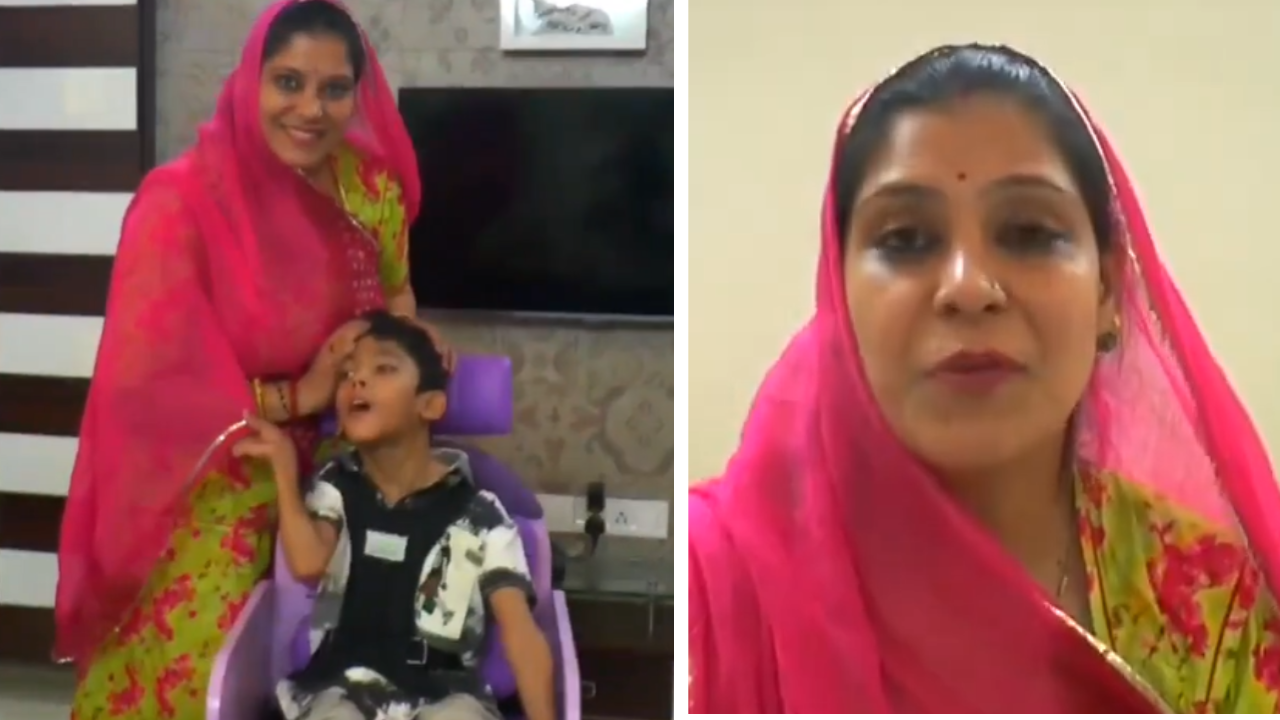
Neha’s son was born premature, at just 27 weeks, weighing barely 900 grams.
Neha lives in Pali, Rajasthan, and is the daughter-in-law of the Hemliawas family in Marwar Junction. As per Dainik Bhaskar and various media reports, she was married about 15 years ago to Dr. Abhishek Bhati. Her son, Duranjay (Devraaj) was born premature, at just 27 weeks, weighing barely 900 grams. Six months later, the family got to know he was later diagnosed with cerebral palsy.Like any mother, Neha had pictured her son in a school uniform, making friends, sitting in a classroom, living a regular life. Reality looked nothing like that. School after school turned him away, saying they simply didn’t have the setup to support a child with disabilities.One school finally agreed to consider him but only after asking a question that changed how Neha saw the whole problem. “Teach him to sit first. Then bring him to school.”
“It was never about the child”
Instead of accepting that her son simply didn’t “fit” into schools, Neha started asking a different question: Why should any child be kept out of school just because the school doesn’t have the right equipment?Looking for answers, she went on to do a Master’s in Rehabilitation Psychology. During her studies, she realised that for children with cerebral palsy, the biggest obstacle often wasn’t their condition, it was the complete absence of disability-friendly equipment in Indian schools.Without the right seating support, these children struggle with things most of us take for granted: sitting through a class, writing, eating, even just being part of a group of classmates.Neha decided this was something she could fix.
9 months of work and she made a very special chair
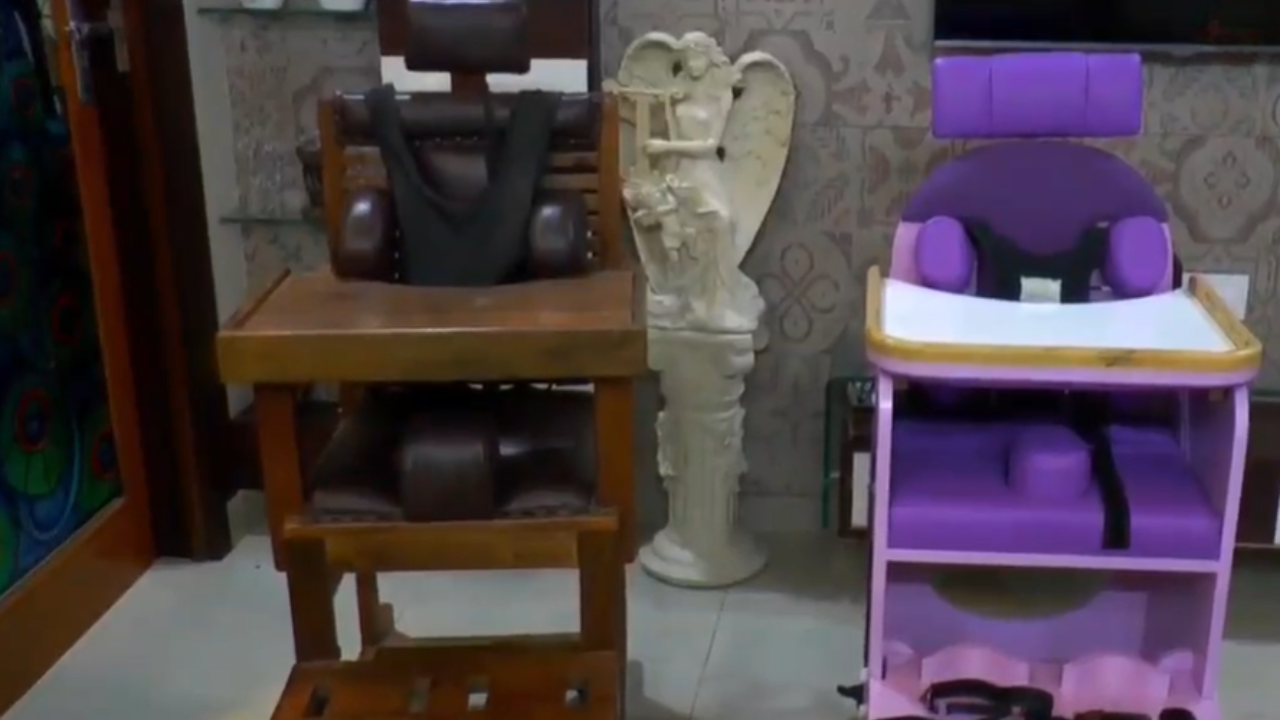
With the Buddy Chair, kids with cerebral palsy can study, write, eat, play and take part in class on their own.
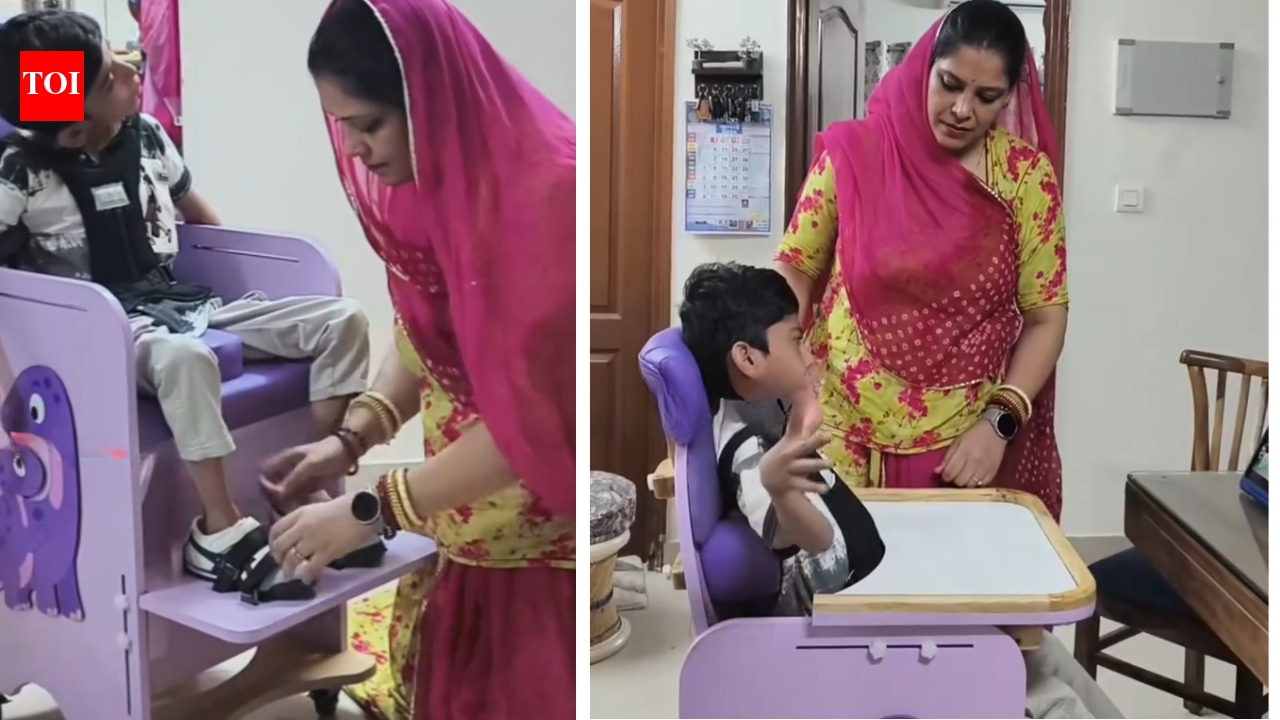
Working alongside physiotherapists, occupational therapists, special educators and other parents, Neha spent close to nine months researching and building an adaptive seating system designed specifically for Indian children. Along the way, she started Unnati Adaptive Devices, an organization built around creating assistive tools that make daily life easier for children with disabilities.What came out of it was the ‘Buddy Chair’, an indigenously designed adaptive chair for children between 3 and 12 years old, made for kids with cerebral palsy and other neuro-motor conditions. The chair supports the whole body and helps a child sit safely and comfortably, without needing someone to constantly hold them in place. For many of these children, being able to simply sit still and steady is the difference between joining in and being left out.With the Buddy Chair, kids can study, write, eat, play and take part in class on their own. No one has to prop them up. It also cuts down the risk of falls and gives children a real sense of independence.For Duranjay, the chair has already made a visible difference, he now goes about daily activities with far more confidence and freedom than before.
The chair already has a patent
This isn’t just a prototype sitting in a lab. The Buddy Chair has already been patented, and now it has national recognition too. As per various media reports, NITI Aayog’s Atal Innovation Mission picked Neha as one of 26 grassroots innovators from across the country for the Grassroots Innovator Recognition 2026, in the HealthTech Assistive Technology category.She’s also the first woman from Rajasthan to win this recognition in that category. She’ll receive the award from President Droupadi Murmu in New Delhi on July 31.
“Don’t change the child, change the world around them.”
For Neha, this was never about building just one product. The bigger goal is to build assistive solutions that help children with disabilities live more independently. She believes society usually tries to mould children to fit into existing systems. She thinks it should work the other way round.Children shouldn’t have to change to fit the world. The world should change so that every child gets treated with dignity, gets equal opportunity, and gets the chance to build a life of their own.
One mother’s fight is helping redefine what inclusion means
Across India, countless parents of children with disabilities are still searching for schools willing and able to include their kids. Neha Solanki’s story is a reminder that inclusion isn’t just about opening the school gate. It’s about making sure that once a child walks in, the support is actually there.It all started with one painful question, “Where will the child sit?” and it’s now become an answer to a much bigger one: How do we build schools where every child truly belongs?